
More Than Just a Baseball Stadium
Think about the last time you brought your car to the dealership for routine maintenance. You expected an oil change, maybe a tire rotation, and to be back on the road that afternoon. However, after opening the hood, the technician discovers a much larger problem. Suddenly, what was supposed to be a simple service becomes a costly repair, with additional work and a longer turnaround time than originally anticipated.
Now imagine encountering a similar situation while planning a $2.3 billion baseball stadium, complete with a massive roof and a deadline tied to the 2029 Major League Baseball season.
That is one of the challenges facing the Tampa Bay Rays and the construction professionals involved in their proposed new stadium.
For our second publication, we wanted to discuss an exciting development in the Tampa Bay area and look beyond the architectural renderings. What does it actually take to construct something of this magnitude?
How Did We Get Here?
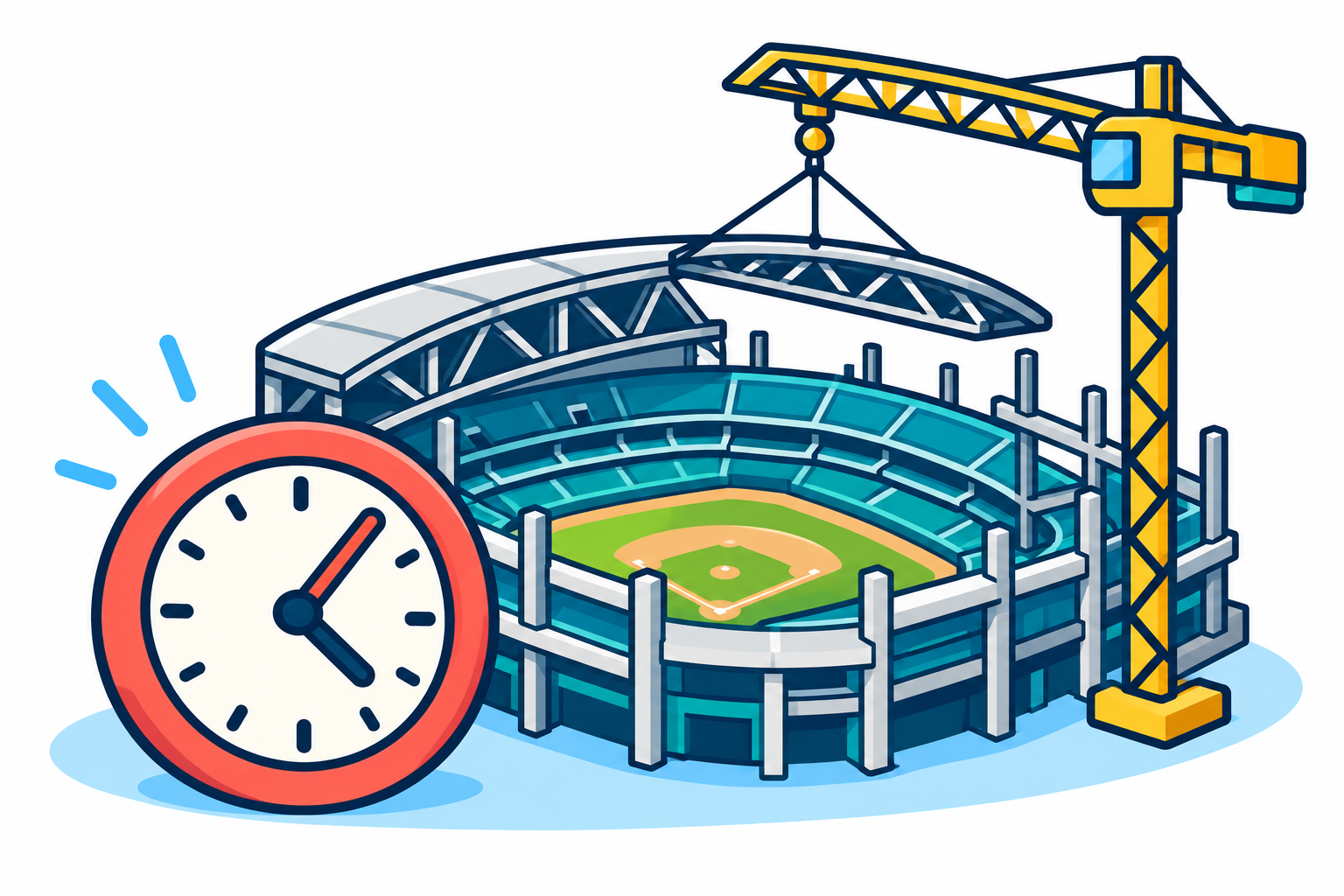
The Rays have spent years searching for a permanent stadium solution. Following Hurricane Milton's damage to Tropicana Field in 2024, the team played its 2025 season at George M. Steinbrenner Field in Tampa. An earlier stadium redevelopment agreement in St. Petersburg also fell apart in 2025.
Now, under new ownership, the Rays are moving forward with plans to construct a stadium at Hillsborough College's Dale Mabry campus, across from Raymond James Stadium.
In August 2026, Tampa City Council and Hillsborough County approved major development and funding agreements. The goal is to have the new ballpark ready for the 2029 baseball season.
What Exactly Is Being Built?
The proposed ballpark would feature approximately 30,000 seats, a fixed roof, modern amenities, and climate-controlled playing conditions.
However, the development extends well beyond the stadium itself.
Plans also envision a revitalized Hillsborough College campus, restaurants, residential buildings, hotels, and public gathering spaces.
This creates an interesting construction challenge. Rather than developing an empty property, the project involves transforming an existing college campus into a destination capable of accommodating thousands of visitors.
An Unexpected Challenge: The Roof
One of the project's most interesting engineering challenges surfaced before construction even began.
In March 2026, an independent analysis conducted by Skanska and Maffeis Engineering identified a potential budget concern of at least $300 million associated with the proposed roof structure.
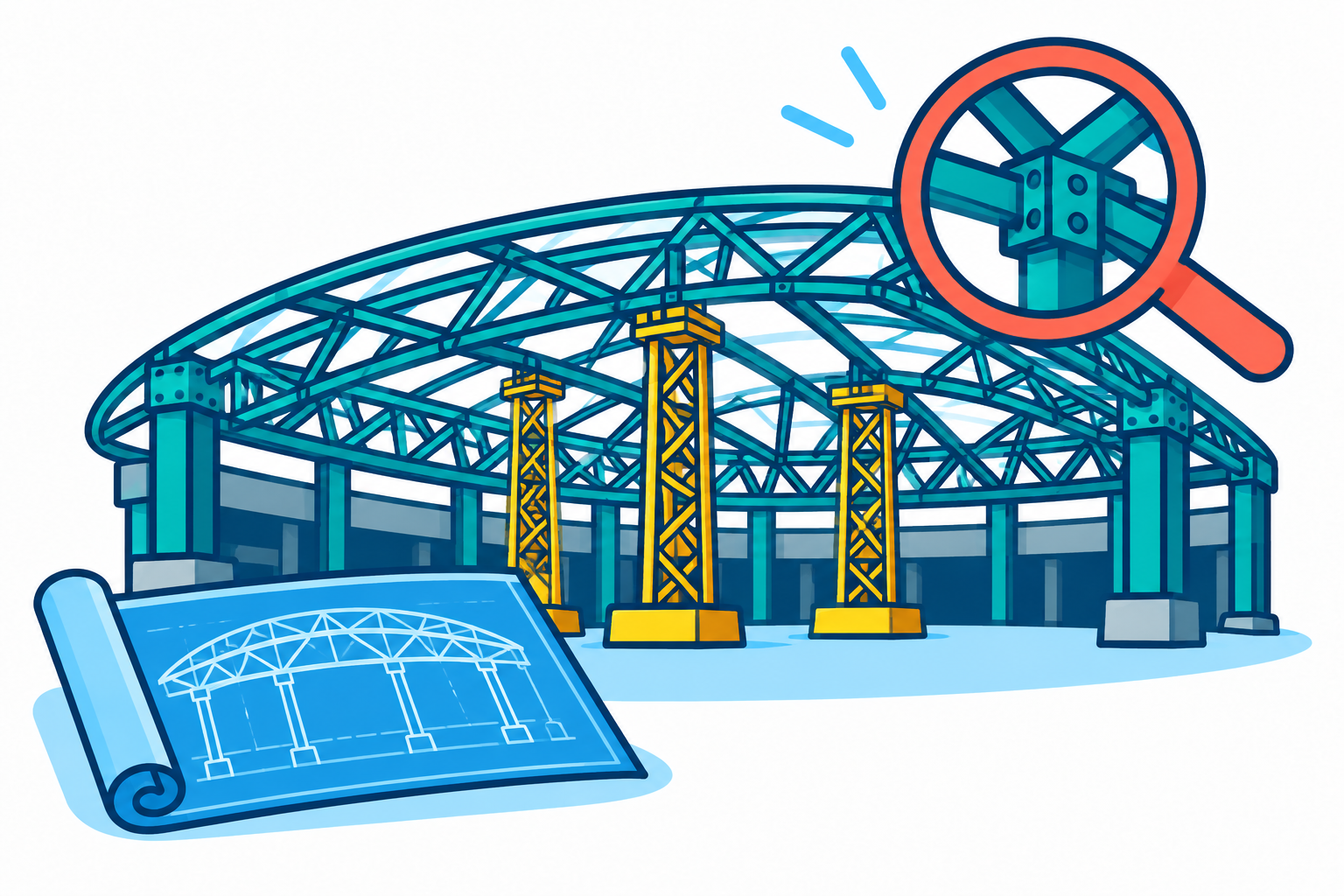
The original concept utilized a grid-shell system, a structural arrangement of interconnected members designed to span large distances while distributing loads throughout the roof.
However, the review estimated that the structural weight could range from approximately 73 to 117 pounds per square foot, considerably higher than the original assumption of 30 pounds per square foot.
Why is this significant?
A heavier roof can require larger structural members, stronger connections, and potentially greater support from the columns and foundations below. These changes can affect material quantities, fabrication requirements, and construction costs.
The report also identified the potential need for 63 temporary support towers, ranging from 135 to 245 feet in height, during roof erection. These towers would temporarily support portions of the structure until the roof system could safely carry its own loads.
Additionally, the proposed polymer roof covering raised concerns regarding punctures, tearing, and potential damage from storm debris.
Interestingly, the reviewers also evaluated an alternative trussed-arch concept with an estimated structural weight of approximately 49 pounds per square foot, demonstrating how a different structural approach could potentially reduce costs.
Following the review, the Rays' design team revised several roof parameters, including its geometry and construction sequence. Therefore, the earlier $300 million concern should not be interpreted as a confirmed overrun for the revised design.
For us, this is an excellent example of why constructability reviews and engineering coordination are so important before construction begins.
Can Construction Meet the Deadline?
The development agreement outlined an ambitious schedule, including planned demolition in December 2026 and foundation and seating-bowl construction beginning by March 2027.
AECOM Hunt and Turner Construction were selected to manage construction of the stadium.
Think about everything that must happen before the first pitch. Structural work, mechanical systems, electrical installations, inspections, and testing must all be coordinated.
If one major activity is delayed, several others could be affected.
With an anticipated opening in 2029, the schedule leaves little room for unexpected setbacks.
Where Is the Funding Coming From?
According to the August funding framework, the Rays committed approximately $1.37 billion toward the project, along with responsibility for construction cost overruns.
Hillsborough County committed up to approximately $796 million, with funding involving tourism taxes, the Community Investment Tax, and other sources.
The City of Tampa also agreed to provide $80 million toward related infrastructure, with provisions for reimbursement through future district tax revenues.
On October 15, Tampa City Council advanced a process that could allow the city to finance this commitment through bonds. Additional approvals are still necessary before those bonds can be issued.
Our Perspective
At Milrot Industries, we believe projects like this demonstrate how much more construction involves than simply putting a building together.
Design, scheduling, financing, and coordination must all work together to deliver a successful project.
We are excited about what this development could bring to Tampa Bay, especially the opportunities for construction professionals, local businesses, and future development.
However, we also recognize that projects of this magnitude come with significant challenges.
The most interesting question isn't whether Tampa Bay can build a $2.3 billion stadium, but how successfully the project team can navigate the challenges between now and opening day.
As Milrot Industries continues to grow, we look forward to following developments like these and learning from the professionals responsible for bringing them to life.
Thank you for reading our second publication. We look forward to hearing your thoughts.
— Milrot Industries
References
Hillsborough County. (2026, August 28). Hillsborough BOCC approves development and funding agreement, guaranty, and team non-relocation agreement to bring Tampa Bay Rays to Hillsborough County. https://hcfl.gov/newsroom/2026/08/28/hillsborough-bocc-approves-development-and-funding-agreement-guaranty-and-team-non-relocation-agreement-to-bring-tampa-bay-rays-to-hillsborough-county
Mayer, R. (2026, March 18). Will a Rays' roof redesign reduce overrun risks on new stadium costs? WUSF. https://www.wusf.org/sports/2026-03-18/will-rays-roof-redesign-reduce-overrun-risks-new-stadium-costs
Mayer, R. (2026, August 17). Rays select AECOM Hunt and Turner to oversee Tampa stadium construction. WUSF. https://www.wusf.org/sports/2026-08-17/rays-select-aecom-hunt-and-turner-to-oversee-tampa-stadium-construction
Mayer, R. (2026, August 21). Final agreement reached on Rays stadium. Next up: votes by city and county. WUSF. https://wusf.org/text/sports/2026-08-21/final-agreement-reached-stadium-with-rays-tampa-hillsborough-county
Merlis, C. (2026, March 30). Rays stadium roof shows $300M gap in new analysis. Tampa Bay Business & Wealth. https://tbbwmag.com/2026/03/30/rays-stadium-roof-300m-gap/
Newborn, S. (2026, October 15). Tampa takes another step toward helping to pay for a new Rays stadium. WUSF. https://www.wusf.org/politics-issues/2026-10-15/tampa-takes-another-step-toward-helping-to-pay-for-a-new-tampa-bay-rays-stadium
Populous. (2026, July 9). Tampa Bay Rays release interior renderings for new ballpark designed by Populous. https://populous.com/article/tampa-bay-rays-release-interior-renderings-for-new-ballpark-designed-by-populous